

Published by
Teravision Team
Share


Building Mobile Apps With Nearshore Teams: A Complete Guide
- Nearshore Software Development
24 July 2026
Finding a skilled mobile developer in the United States now takes many months of costly recruiting. Chief technology officers routinely face empty talent pipelines while critical mobile product launch deadlines rapidly approach. This severe talent shortage delays vital software releases, stalls business growth, and increases engineering stress for growing technology companies.
Building mobile apps with nearshore teams offers a strong strategy for product leaders who must scale software development without facing long hiring delays. By working with skilled developers in Latin American tech hubs, growing software companies can cut engineering labor costs by forty to sixty percent. This nearshore approach fixes local talent shortages by speeding up engineering team ramp-up times from three months down to less than two weeks. Because these nearshore engineers work in your same time zone, your internal development team enjoys direct real-time collaboration, easy communication, and strong cultural alignment. At its core, this nearshore model delivers the pre-vetted technical skills, fluent English, and flexible month-to-month contracts needed to build high-performance mobile software on time.
But how can busy product leaders plan, budget, and execute this nearshore transition successfully to meet their development goals? To succeed, we must first look at the local hiring issues covered in The Talent Challenge: Why Building Mobile Apps Domestically Is Getting Harder. Our analysis of these major domestic hiring hurdles begins with understanding the true scope of the talent shortage.
Building Mobile Apps With Nearshore Teams: The Talent Challenge: Why Building Mobile Apps Domestically Is Getting Harder
The shortage of mobile engineering skills
Finding native engineers who know Swift and Kotlin is hard. Cross-platform talent for React Native or Flutter is also in short supply. Most US tech firms compete for the same local talent pool. This talent gap makes it hard to scale your mobile product. Product leaders often spend months trying to find a single developer who fits their team.
Because of this gap, hiring nearshore developers has become a key path for growth. We believe that building mobile apps with nearshore teams is the best way to solve this talent squeeze. Doing so connects you with a large pool of pre-vetted engineers. By widening your search, you can bypass local gaps and keep your roadmaps on track.
High local costs and slow hiring times
Local app building is not just hard to staff, but it is also very costly. Senior mobile developers in the US often cost between $130 and $200 per hour. When you scale a team at these rates, your budget shrinks fast. Research shows that nearshore options can reduce labor costs by 40% to 60% compared to US-based hiring. At Teravision, our clients get 30% to 50% cost savings compared to local US hiring.
Local hiring takes two to four months to source and onboard a senior dev. Nearshore teams can ramp up in just two to six weeks. This speed helps product leaders launch features faster and stay ahead of other firms. At Teravision, we speed up this process even more with our quick two-week ramp-up time.
How time zone and workflow alignment helps
Many product leaders worry about communication when outsourcing. When building a mobile app, you must deal with complex requirements. If your team is far away, small mix-ups can block progress and ruin timelines. A study in PubMed Central shows that these common software process issues are best solved through clear communication plans.
This is why time zone and cultural alignment are key factors for success. Working in the same hours allows for real-time teamwork. Nearshore teams in Latin America share EST and CST time zones with US firms. This close alignment helps engineers fit into your internal workflows without delays. It makes the daily stand-up meetings easy and keeps everyone on the same page.
When engineers share your work hours and speak fluent English, working together becomes easy. You can run daily agile standups and solve bugs in real time. This level of teamwork is very hard with far offshore models. By choosing the nearshore path, you build a strong unit that supports your app's growth.
What Is Nearshore Mobile App Development?
Defining the nearshore model
Nearshore app building means working with a software team in a nearby country. For US firms, this often means hiring engineers in Latin America. It gives you the skills you need without the pain of a ten-hour time gap. When building mobile apps with nearshore teams, your business gets real-time work.
Why mobile development needs real-time teamwork
Mobile app building moves fast and needs constant testing. To launch a great product, your developers must run daily standup meetings and fix bugs in real time. If your team is far offshore, a simple bug can take a whole day to fix. Real-time work lets your product leads sync with the squad and push rapid updates.
Bad workflow gaps can also lead to bad errors in the software build. A study on the National Institutes of Health site shows how process problems hurt group work. Nearshore teams solve this issue with full time zone overlap. They work during your same EST or CST office hours, which makes daily chat simple.
Onshore, nearshore, and offshore models
To choose the best path, you must compare nearshore with onshore and offshore setups. Onshore teams share your home country, which gives you a strong match but costs a lot. Offshore teams live far away, which saves money but brings huge time gaps. Nearshore teams offer a middle path with the best of both worlds.
| Model | Time Zone Overlap | Travel Proximity | Communication Quality | Cultural Alignment |
|---|---|---|---|---|
| Onshore | Full overlap (0 hours difference) | Local (1 to 3 hour flights) | High (native English) | High (local culture match) |
| Nearshore | EST/CST overlap (0 to 2 hours) | Close (2 to 4 hour flights) | High (fluent English) | High (strong regional match) |
| Offshore | None (10 to 12 hours difference) | Far (12 to 24 hour flights) | Variable (different native tongues) | Low (major regional gaps) |
Travel and culture also play huge roles in app builds. Latin American tech hubs are just a short flight away from most US cities. This closeness makes it easy to visit your nearshore team for kickoff sessions. These regions also share many cultural values with the US, which prevents common work style clashes.
How Nearshore Teams Speed Up Mobile App Delivery
Nearshore ramp and speed advantage
Finding local devs to build your mobile app is a slow process. US firms often face a local hiring timeline of two to four months to find a mobile coder. In contrast, nearshore teams can ramp up in two to six weeks. At Teravision, we cut this time even further by setting up a nearshore development team in just two weeks.
Real-time teamwork during work hours
Building mobile apps with nearshore teams solves local talent gaps. Many US app projects stall because they cannot find local experts in Swift, Kotlin, or React Native. By using nearshore talent pools, you can hire pre-vetted experts who are ready to work on your product right away. This large pool of pre-vetted coders stops hiring delays and speeds up your mobile launch.
Overlapping work hours in Latin America speed up app build cycles. When your nearshore devs live in Latin America, they share the same time zones as your US teams. This close time zone match allows for real-time teamwork and daily team chats. If a bug breaks your Swift or React Native code, your nearshore team can help fix it instantly.
This instant feedback loop keeps your mobile app deployment on track. Daily stand-up meetings, code reviews, and live tests happen without any planning pain. Academic research on agile remote teams shows that they work best when team members share their daily work hours. By aligning your daily work hours, you create a smooth workflow that speeds up your feature releases.
Agile setup and workflows
Nearshore team members fit into your current workflows right away. Because they share your main language and work culture, there is no onboarding lag. They use the same tools, like Jira, GitHub, and Slack, that your local devs use every day. This matching technical background means they can join your daily stand-ups on day one.
This tight fit makes building mobile apps with nearshore teams work so well for growing firms. Your product leaders can assign coding tasks and review code without timezone gaps. Quick and frequent feedback loops prevent code merge errors and reduce software bugs. By working as one single unit, you can launch new features on time and keep users happy.
Cost Comparison: Nearshore vs Onshore vs Offshore for Mobile Apps
When you plan on building mobile apps with nearshore teams, comparing rates and models is a vital first step. Each development path offers different rates, work hours, and communication rules. Product leaders must balance these trade-offs to protect their budget and keep their roadmap on track. To help you choose, we have compared onshore, nearshore, and offshore teams across key business factors below.
| Model | Onshore | Nearshore | Offshore |
|---|---|---|---|
| Hourly Rate | $130-$200+ | $75-$95 | $20-$50 |
| Time Zone Overlap | Full overlap | 3-5 hours (EST/CST) | Minimal (0-2 hours) |
| Communication Quality | Excellent | High (fluent English) | Variable |
| Cultural Fit | Excellent | Strong (Western match) | Low |
| Ramp Time | 2-4 weeks | 2 weeks | 6-10 weeks |
| Management Overhead | Low | Low to Medium | High |
Hourly rates and development costs
Onshore developers offer great quality but come with very high costs. Senior US devs often cost between $130 and $200 per hour. When you build a large app, these rates can drain your budget very fast. Offshore teams in distant regions cost much less, with rates from $20 to $50 per hour. But those low rates often come with hidden costs like slow communication and extra management tasks.
A nearshore development team in Latin America balances cost and quality. These teams charge between $75 and $95 per hour. This path delivers 40% to 60% cost savings compared to onshore teams. At Teravision, our clients get 30% to 50% cost savings compared to local US hiring. This model lets you hire top talent without the high cost of local agencies.
Time zone and communication trade-offs
Time zone overlap is a major factor for project speed. Nearshore teams share a 3-to-5-hour overlap with US EST and CST zones. This overlap lets you run daily meetings and solve bugs in real time. Offshore teams work on the other side of the world. This huge gap can cause a 12-hour delay for simple code changes. This delay often slows down your product launch and adds stress to your team.
Communication quality is just as vital as work hours. When you work with far offshore teams, language gaps can lead to complex issues. A study on PubMed Central shows that clear communication plans solve these common software issues. Nearshore developers speak fluent English and align with Western business habits. This cultural fit makes it easy for them to join your team and share ideas.
What to Look for in a Nearshore Mobile App Development Partner
When you plan on building mobile apps with nearshore teams, choosing the right partner is key. The right partner helps you scale fast, control costs, and build a high-quality product.
To find the best fit, you should look for several key traits:
- Technical Skills: Deep platform expertise in Swift, Kotlin, and React Native.
- Time Zone: Real-time work hours that match your local team.
- English Skills: Clear speech and writing for daily meetings.
- Flexible Terms: Month-to-month setups with no long-term lock-in.
But you must look past simple cost savings to find a true match.
Technical Skills and Platform Expertise
Your partner must have deep skills in Swift, Kotlin, and React Native. They should also know how to build secure mobile code and use modern API tools. It is best to look for a partner that has built apps for your own industry before. If they have done this, they will already know your rules and needs.
A great partner does more than write code. They should use AI tools to speed up their work and help you ship your app faster. For example, we use an AI-powered development framework at Teravision to cut ramp-up times. This setup helps us form a nearshore development team for you in just two weeks. This is much faster than the six to ten weeks most other shops need.
Time Zone and Language Match
When hiring nearshore developers, time zone overlap is a major plus. Working in the same hours means you can talk in real time. It helps you solve bugs fast and run daily stand-ups without delay. Your nearshore team should share your working hours, like EST or CST, to keep the workflow smooth. This daily match helps avoid the long delays that often happen with offshore teams.
Language skills and clear communication are just as vital. When outsourcing software development, teams often face complex requirements engineering process issues. According to study data on the National Institutes of Health (NIH) site, these issues can be solved with strong communication plans. You should choose a partner whose engineers speak clear English so they can join your meetings and share ideas easily.
Flexible Terms and Proven Work
A reliable partner will offer flexible engagement terms to suit your business. You should avoid long-term contracts that lock you in. Instead, look for a month-to-month setup that lets you scale up or down as your needs change. This flexibility is key for growth-stage startups that need to manage cash flow while building a strong product.
Finally, check their past work and client list. A strong partner should have a proven history of success with major clients. For instance, we have over twenty years of experience and have shipped more than one thousand projects. We are also an AWS Advanced Partner and have worked with major brands like McDonald's and Live Nation. Our 95% client retention rate shows we build long-term trust through our product engineering services.
Engagement Models for Mobile App Development
Choosing the right path is vital when building mobile apps with nearshore teams. You will need the right skills for Apple and Google app builds. Build plans often face complex design issues that require clear communication paths. Choosing the correct model helps you keep your code clean and your timeline on track.
Staff augmentation for immediate scale
This model embeds extra devs straight into your team. It is the best fit when you already have a lead but need to fill a skill gap. For instance, if you build a native iOS app, you might need a Swift coder to finish the build. You do not need a whole new team, just one expert to speed up your work.
With staff augmentation, you get a fast two-week ramp-up time to hire senior devs. We help you build agile nearshore teams with this model to keep your project moving fast. Scaling up or down is simple and runs on open month-to-month terms.
Dedicated squads for complete ownership
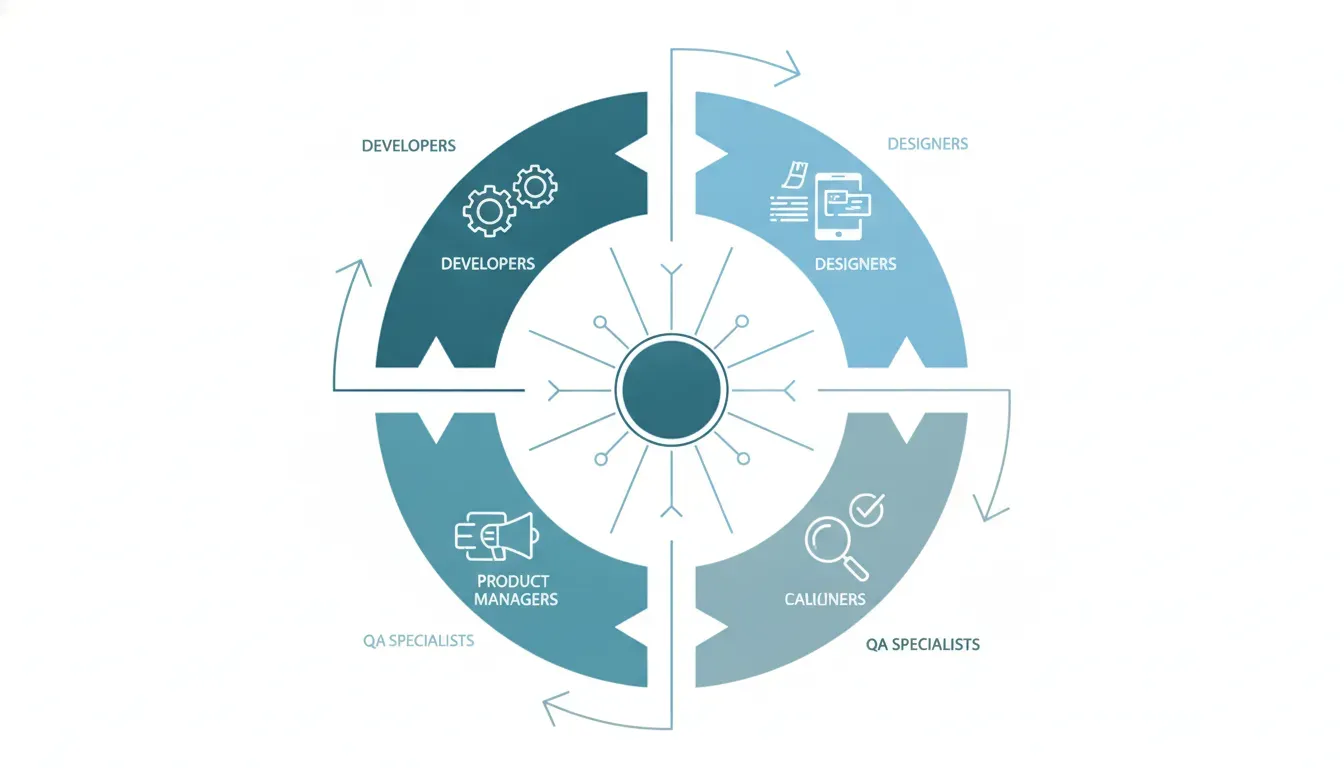
If you do not have internal tech leaders inside your firm, a dedicated team is the right choice. This approach gives you a full squad to build your product. We provide AI-powered dedicated teams to speed up your build. The squad contains a project manager, QA testers, and designers alongside the coders.
This setup is best for cross-platform app builds where you need many skills to launch on both platforms. Research shows that nearshore teams using AI frameworks offer strong strategic gains for product firms. You get full product care without the stress of running daily tasks.
Venture product studio for strategic partnership
For new startups or new product ideas, a venture studio model is the best fit. This model goes beyond coding to offer deep support. It covers everything from your first idea to product launch and scaling. You get expert advice on product-market fit, user research, and growth plans.
This works well for complex mobile apps that need strategic design before writing any code. It acts as a co-founder for your mobile app, helping you manage the hard steps of building a tech business. This model is perfect when you need a partner to share the journey and risks.
Building a Mobile App With Nearshore Teams: A Step-by-Step Process
When building mobile apps with nearshore teams, you need a clear plan to succeed. Nearshore partners help you scale fast without the cost of local hiring. But a smooth launch needs a structured path from start to finish.
Phases of Nearshore Mobile Development
Outsourcing software can cause complex engineering issues if teams do not talk well. Research shows that clear sharing plans can solve these requirements engineering process issues early in the project. We use a set of proven steps to make sure your product matches your business goals.
- Define Your Mobile App Requirements: Decide if you need native or cross-platform apps for iOS and Android. Outlining main MVP features helps prevent scope creep later.
- Select Your Nearshore Partner: Shortlist partners based on their mobile app history and time zone fit. Look for teams with a strong past who can talk in fluent English.
- Team Assembly and Onboarding: Once you choose a partner, they will set up your development squad. At Teravision, we build your nearshore development team with a quick 2-week ramp-up time to get your project moving without delay.
- Agile Kickoff and Knowledge Transfer: Host a kickoff meeting to align your in-house product leads with the new team. Share code guides, design files, and product maps to set clear goals.
- Build, Test, and Iterate: The engineers work in short sprint cycles of two weeks. Constant testing makes sure each build is stable before you add new features.
- App Store Deployment Support: Your nearshore partner should help you follow the store rules for Apple and Google. They prepare the app files, store text, and images for a smooth launch.
- Ongoing Maintenance and Scaling: After launch, the team tracks speed, fixes bugs, and plans future updates. A long-term nearshore model makes it easy to scale your team as your user base grows.
Best Practices for a Smooth Launch
To get the most out of this process, choose the right people. Working with a nearshore team is not like simple staff hiring because they act as a full squad. Before you start hiring nearshore developers, make sure you align your code and chat tools.
A strong bond also relies on shared trust. Real-time teamwork in the same time zone helps you address issues fast. With the right roadmap and a skilled team, you can build high-quality mobile products on time and within your budget.
Frequently Asked Questions
How much does building mobile apps with nearshore teams cost?
Hourly rates for nearshore coders in Latin America often range from $75 to $95. According to nCube, nearshore hiring can cut project costs by 40% to 60% compared to local hiring. At Teravision, our clients save 30% to 50% compared to hiring in the US. This helps product leaders stretch their software budget without losing quality.
Is nearshore better than offshore for building mobile apps?
Offshore teams in Asia often have lower starting rates, but nearshore partners often save you more money in the long run. Working in the same time zone means fewer delays, faster talk, and less extra work. Research on PubMed Central shows that clear sharing helps solve complex software build issues. This time zone match makes nearshore teams a better value for complex mobile projects.
How fast can you scale building mobile apps with nearshore teams?
Most nearshore partners can find and onboard senior coders in two to six weeks. At Teravision, we speed up this process even more. We build and ramp up your nearshore coding team in less than two weeks. This quick ramp-up helps product leaders launch new app features faster and stay ahead of rivals.
What contract terms apply when building mobile apps with nearshore teams?
Product leaders should look for open contract terms that do not lock them in. At Teravision, we offer month-to-month contracts so you can scale your team size up or down as your project needs change. This setup reduces money risk for growth-stage tech startups and helps leaders control their build budget.
Ready to accelerate your nearshore mobile app development?
Delaying your mobile app project risks missing critical launch goals and losing valuable market share to faster, more agile competitors. Every week you spend searching for local talent is a week your rivals use to win over your target audience. Starting your nearshore engineering team now gets your product to market months sooner with experienced software developers who work in your time zone. Our nearshore engineers ramp up in just two weeks, helping you deliver on time while saving thirty to fifty percent over slow local hiring.
Ready to scale? Book a Discovery Call to start planning your nearshore mobile project with us today.
Related Articles

Set up a Discovery Call with us today and start working with Teravision, a company with 20+ years of experience in the software industry and Development Centers in Mexico and Colombia



Dedicated Software Teams
Augmented Teams
What's the Difference